
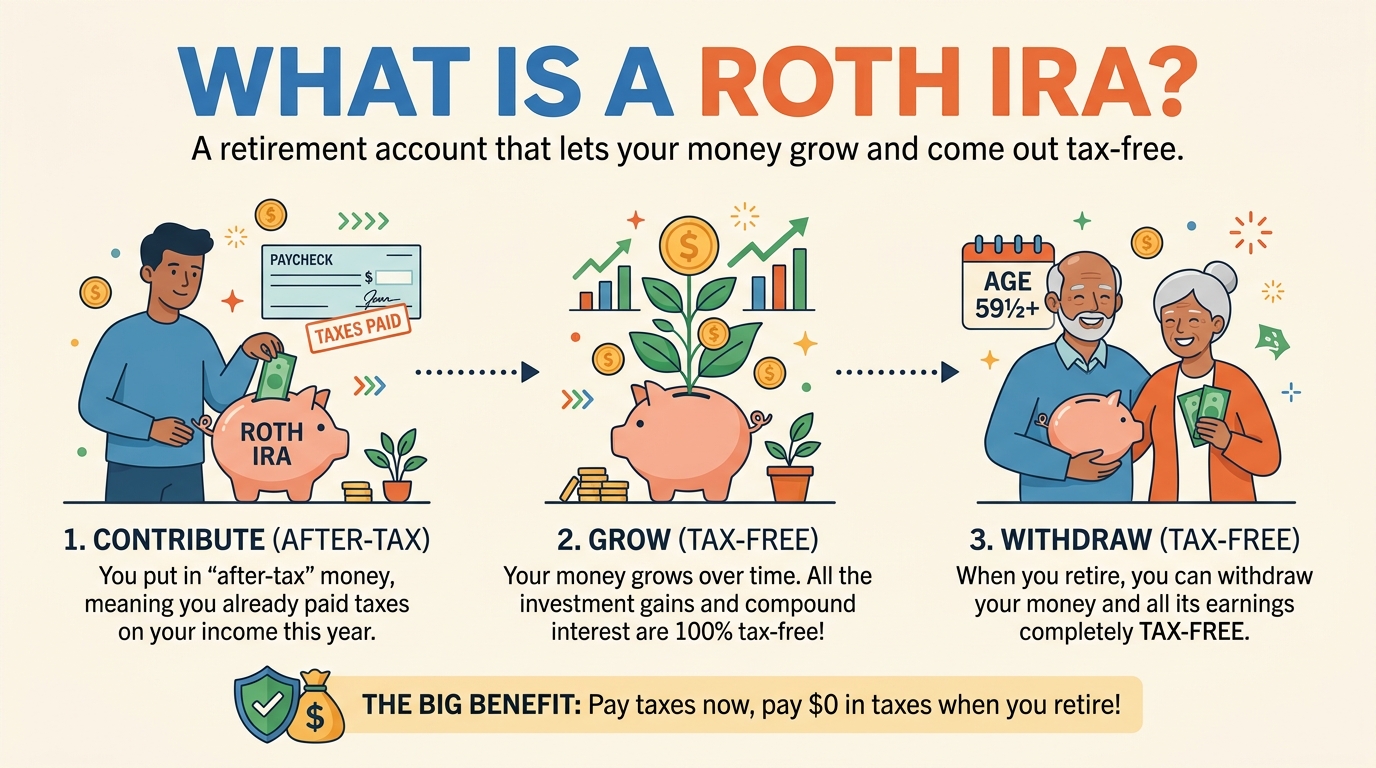
Hey there, savvy investors! Ever heard of a Roth IRA and wondered what all the buzz is about? Well, buckle up because I’m about to drop some knowledge on you. A Roth IRA is like the superhero of retirement accounts, offering tax-free growth and withdrawals in retirement. Unlike its traditional counterpart, contributions to a Roth IRA are made with after-tax money, meaning you pay taxes upfront but enjoy tax-free withdrawals down the road. Sound too good to be true? It’s not! So, if you’re looking to supercharge your retirement savings and minimize your tax burden, a Roth IRA might just be the financial sidekick you’ve been searching for.
Eligibility Requirements for a Roth IRA
Eligibility for a Roth IRA is based on income limits set by the IRS. In order to contribute to a Roth IRA, your modified adjusted gross income (MAGI) must fall below certain thresholds determined by your tax filing status. For example, for single filers in 2021, the maximum MAGI allowed to contribute to a Roth IRA is $140,000, with a phase-out starting at $125,000. For married couples filing jointly, the limits are higher, with the phase-out starting at $198,000 and the maximum MAGI allowed at $208,000.
Age requirements for a Roth IRA are straightforward. You must have earned income to contribute to a Roth IRA, and there is no age limit for making contributions. However, there is a required minimum distribution (RMD) age of 72 for traditional IRAs, but not for Roth IRAs. This means you can continue to contribute to a Roth IRA indefinitely, as long as you have earned income, making it a powerful retirement savings tool for individuals of all ages.
 What Is a Roth IRA?
How to Open a Roth IRA Account
Research Financial Institutions: To open a Roth IRA account, start by researching different financial institutions that offer this type of retirement account. Look for reputable institutions with low fees and a good track record of customer service.
Choose the Right Provider: Once you have identified a few potential providers, compare their offerings in terms of investment options, fees, and customer support. Select the provider that best aligns with your investment goals and preferences.
Complete the Application: After choosing a provider, you will need to complete an application form to open a Roth IRA account. Provide the necessary personal information and follow the instructions carefully to ensure that your account is set up correctly.
Make Your Initial Contribution: To activate your Roth IRA account, you will need to make an initial contribution. Be aware of the current contribution limits set by the IRS and ensure that you do not exceed these limits to avoid penalties.
Roth IRA Contribution Limits
Annual Contribution Limits: As of 2021, the annual contribution limit for Roth IRAs is $6,000 for individuals under 50 years old. For those aged 50 and above, an additional catch-up contribution of $1,000 is allowed, making their total contribution limit $7,000. These limits may be subject to change based on inflation adjustments set by the IRS.
Income Limits: Roth IRA contributions are also subject to income limits. For single filers, the ability to make the full contribution begins to phase out at $125,000 and is completely phased out at $140,000. For married couples filing jointly, the phase-out range is between $198,000 and $208,000. Beyond these income thresholds, individuals may not be eligible to contribute to a Roth IRA directly.
Roth IRA Withdrawal Rules
Qualified Distributions: Roth IRA withdrawals can be made tax-free and penalty-free if certain criteria are met. To qualify, the account holder must be at least 59 ½ years old and have had the Roth IRA open for at least five years. Qualified distributions also include withdrawals due to disability or for a first-time home purchase (up to $10,000).
Non-Qualified Distributions: If you withdraw earnings from a Roth IRA before meeting the criteria for a qualified distribution, you may be subject to taxes and penalties. Non-qualified distributions are typically taxed as ordinary income and may incur a 10% early withdrawal penalty. It is important to understand the rules to avoid unintended tax consequences.
Comparison of Roth IRA vs. Traditional IRA
Roth IRA: A Roth IRA is a retirement savings account that allows individuals to contribute after-tax income, meaning contributions are not tax-deductible. However, the withdrawals in retirement are tax-free, including any earnings on the investments. This can be beneficial for individuals who anticipate being in a higher tax bracket during retirement.
Traditional IRA: On the other hand, a Traditional IRA allows individuals to contribute pre-tax income, which can lower their taxable income in the year of contribution. However, withdrawals in retirement are taxed at the individual’s ordinary income tax rate. This type of IRA is advantageous for individuals who expect to be in a lower tax bracket during retirement.