
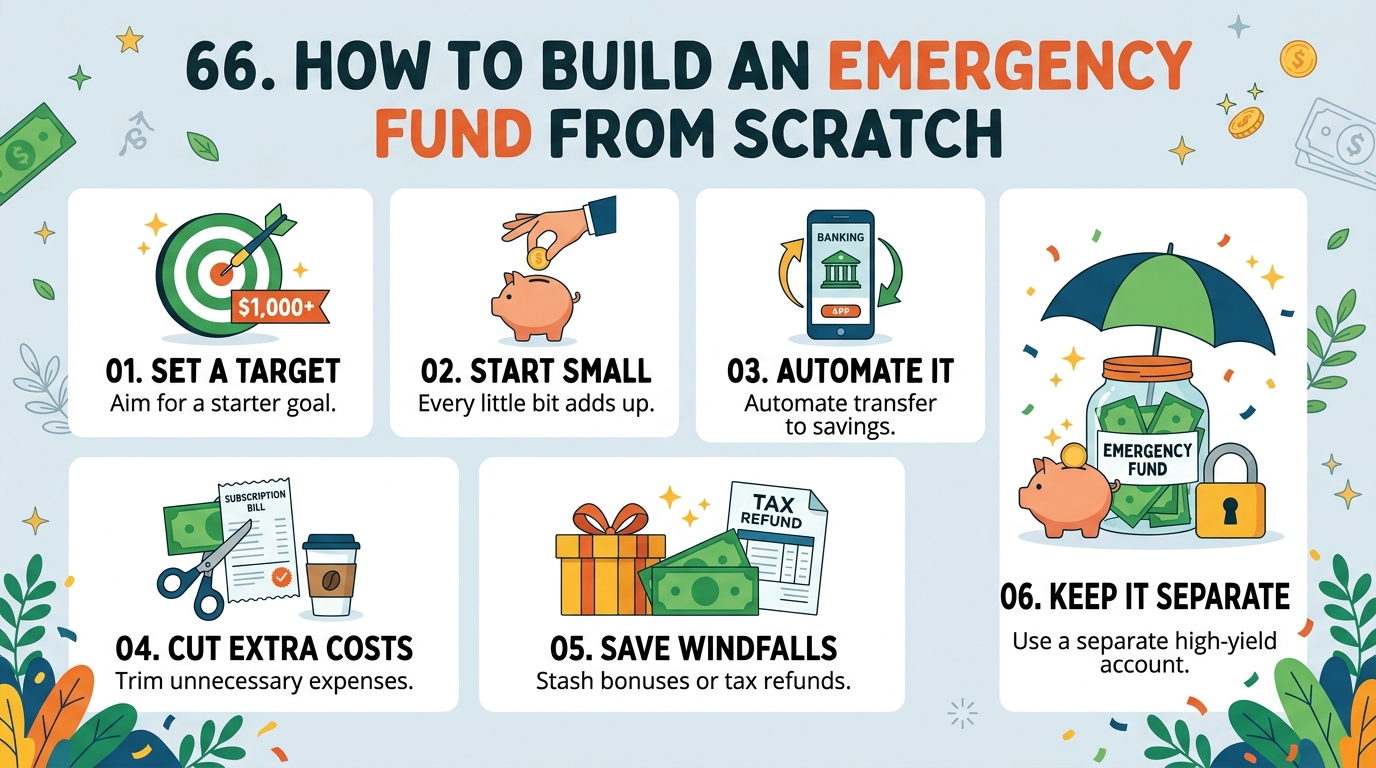
Hey there, savvy savers and financial wizards! Are you ready to take control of your finances and build a safety net that will give you peace of mind in any unexpected situation? Well, look no further because we’re diving into the exciting world of building an emergency fund from scratch.
Picture this: you’re cruising through life, feeling on top of the world, when suddenly – bam! – an unexpected expense hits you like a ton of bricks. That’s where having an emergency fund comes in handy. In this blog post, we’ll guide you through the steps to start building your emergency fund, setting you on the path to financial security and stability. Get ready to say goodbye to financial stress and hello to a brighter, more secure future! Let’s dive in and take charge of your financial well-being today.
Ways to Save for Your Emergency Fund
Automate Your Savings: One of the most effective ways to save for your emergency fund is to automate your savings. Set up automatic transfers from your checking account to your savings account on a regular basis. This way, you won’t have to rely on your willpower to save money consistently.
Cut Unnecessary Expenses: Take a close look at your spending habits and identify areas where you can cut back. By reducing unnecessary expenses such as dining out, subscription services, or impulse purchases, you can free up more money to contribute to your emergency fund.
Set Realistic Savings Goals: Break down your savings goals into smaller, manageable targets. Start by aiming to save a certain amount each week or month. Setting achievable goals will help you stay motivated and track your progress as you work towards building your emergency fund.
 How to Build an Emergency Fund From Scratch
Managing Your Emergency Fund
Regular Monitoring: It is crucial to regularly monitor your emergency fund to ensure it stays on track with your financial goals. Set a schedule to review your fund, ideally monthly or quarterly, to assess if any adjustments are necessary. Keep track of any withdrawals or additions to the fund to maintain an accurate balance.
Emergency Fund Allocation: Determine the best place to store your emergency fund based on accessibility and potential growth. While it should be easily accessible in case of emergencies, consider options that offer higher interest rates than a traditional savings account, such as a high-yield savings account or a money market account. Assess the pros and cons of each option to make an informed decision.
Tips for Building Your Emergency Fund Faster
Automate Savings: One of the most effective ways to build your emergency fund faster is to automate your savings. Set up automatic transfers from your checking account to your emergency fund account on a regular basis. This way, you won’t even have to think about saving – it will happen automatically.
Reduce Expenses: Another tip for building your emergency fund faster is to cut back on expenses. Take a close look at your budget and identify areas where you can reduce spending. This could mean cutting out non-essential items, finding more affordable alternatives, or negotiating better deals on your regular expenses.
Boost Your Income: Increasing your income can also help you build your emergency fund faster. Consider taking on a side hustle, freelancing, or selling items you no longer need to bring in extra cash. Any additional income you earn can be put directly towards your emergency fund, helping you reach your goal more quickly.
Common Mistakes to Avoid When Building an Emergency Fund
1. Not prioritizing the emergency fund: One common mistake people make is not prioritizing their emergency fund over other expenses or financial goals. It’s essential to make building your emergency fund a top priority to ensure financial security in times of need.
Inconsistency in contributions: Another mistake is being inconsistent with contributions to the emergency fund. Set a specific amount to save each month and stick to it. Consistency is key to reaching your emergency fund goal in a timely manner.
Using the emergency fund for non-emergencies: Some individuals dip into their emergency fund for non-emergencies, such as vacations or shopping sprees. It’s important to only use the fund for true emergencies to avoid depleting it unnecessarily.
Neglecting to review and adjust: Over time, your financial situation may change, and your emergency fund needs may evolve. Neglecting to review and adjust your emergency fund contributions and goals regularly can lead to being underprepared when a true emergency arises.
Celebrating Your Financial Milestone: Fully Funded Emergency Fund
Congratulations! Achieving a fully funded emergency fund is a significant financial milestone that deserves celebration. Your emergency fund serves as a safety net, providing you with peace of mind and financial stability in times of unexpected expenses or emergencies. By having a fully funded emergency fund, you have taken a crucial step towards financial security.
Take a moment to reflect on the hard work and dedication it took to reach this goal. Recognize the discipline and commitment you demonstrated in setting aside funds for emergencies. Celebrate your accomplishment by acknowledging the importance of financial preparedness and the positive impact it has on your overall financial well-being. Remember, maintaining a fully funded emergency fund is an ongoing commitment, so continue to prioritize saving for unexpected expenses to safeguard your financial future.