
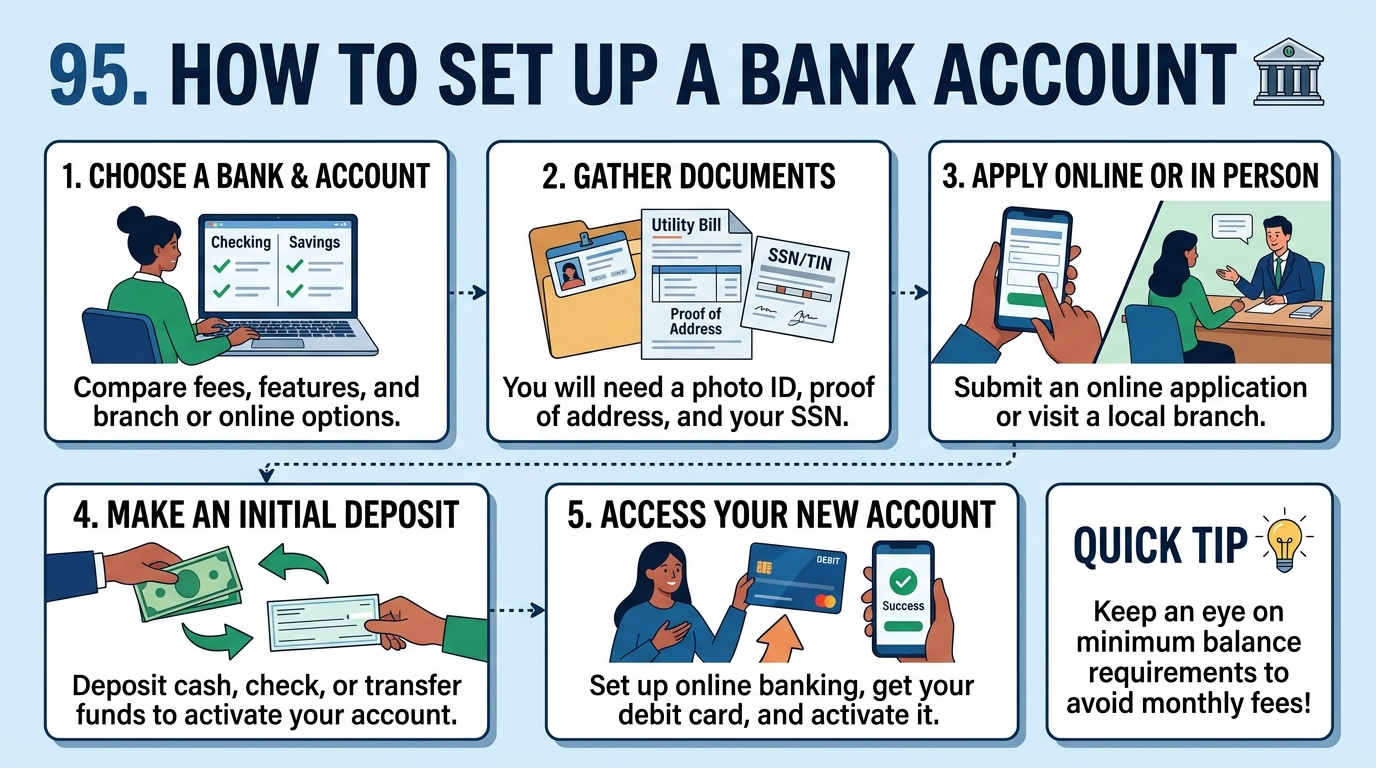
Looking to take control of your finances and start saving like a pro? Setting up a bank account is the first step towards financial independence and security. Whether you’re a college student managing your first paycheck or a seasoned professional looking to streamline your finances, having a bank account is essential. In this blog post, we’ll walk you through the process of setting up a bank account, from choosing the right type of account to understanding the various fees and features. So, grab your coffee, sit back, and let’s dive into the world of banking!
Types of Bank Accounts
Savings Accounts: Savings accounts are designed for individuals to save money over time. They typically offer interest on the deposited funds, helping account holders grow their savings. These accounts usually have limits on the number of withdrawals allowed each month and may require a minimum balance to earn interest.
Checking Accounts: Checking accounts are used for everyday transactions such as paying bills, making purchases, and withdrawing cash. They often come with features like debit cards, online banking, and check-writing capabilities. Some checking accounts may charge monthly fees, so it’s essential to compare different options to find one that suits your needs.
Certificate of Deposit (CD): CDs are time deposits that require the account holder to deposit a fixed amount of money for a specific period, ranging from a few months to several years. In exchange, the bank pays a higher interest rate than a regular savings account. However, withdrawing funds before the CD matures may result in penalties.
 How to Set Up a Bank Account
Required Documents
Identification Proof: When opening a bank account, you typically need to provide a valid form of identification, such as a driver’s license, passport, or government-issued ID card. This helps the bank verify your identity and prevent fraud.
Proof of Address: Banks usually require proof of address to confirm your residency. This can be a utility bill, rental agreement, or a bank statement with your current address. Make sure the document is recent and shows your name and address clearly.
Social Security Number: In some countries, you may need to provide your Social Security number or a similar identification number. This is essential for tax reporting purposes and to comply with government regulations.
Additional Documents: Depending on the bank’s requirements, you may also need to provide additional documents such as proof of income, employment verification, or business registration documents if you are opening a business account. It’s important to check with the specific bank you are dealing with to ensure you have all the necessary paperwork in order to open your account smoothly.
Setting Up Your Account Online
Benefits of Setting Up an Account Online: Setting up a bank account online offers convenience and efficiency. You can open an account from the comfort of your home at any time, without the need to visit a physical branch. Online account opening processes are usually streamlined, requiring minimal paperwork and reducing the time it takes to get your account up and running.
Steps to Set Up Your Account Online: To begin setting up your account online, visit the bank’s website and look for the option to open a new account. Follow the instructions provided, which typically involve filling out an online application form with your personal information, selecting the type of account you want, and agreeing to the terms and conditions. You may also need to upload scanned copies of required documents such as identification and proof of address. Once you submit your application, the bank will review it and may contact you for further verification before finalizing the account setup process.
Making Your First Deposit
Depositing funds into your bank account for the first time can be a straightforward process. Most banks offer multiple options for making your initial deposit, including in-person at a branch, through an ATM, or via mobile deposit. If you prefer a face-to-face interaction, visiting a local branch allows you to meet with a representative who can assist you in making your first deposit and answer any questions you may have.
For added convenience, many banks also offer mobile deposit services through their banking apps. This feature allows you to deposit a check by simply taking a photo of the front and back of the check using your smartphone. Make sure to endorse the check properly with your signature and “For Deposit Only” before initiating the mobile deposit. Remember to check your bank’s policies regarding fund availability for mobile deposits, as there may be holds on the funds until the check clears.
Managing Your Account
Monitoring Transactions: It is essential to regularly monitor your account transactions to track your spending, identify any unauthorized charges, and ensure your account is secure. Most banks provide online banking platforms or mobile apps that allow you to view real-time transaction history, set up alerts for specific activities, and manage your account from anywhere.
Budgeting and Goal Setting: Utilize your bank account to help with budgeting and saving goals. Many banks offer tools to categorize your expenses, set spending limits, and create savings goals. By tracking your income and expenses through your account, you can better understand your financial habits, make informed decisions, and work towards achieving your financial objectives.