
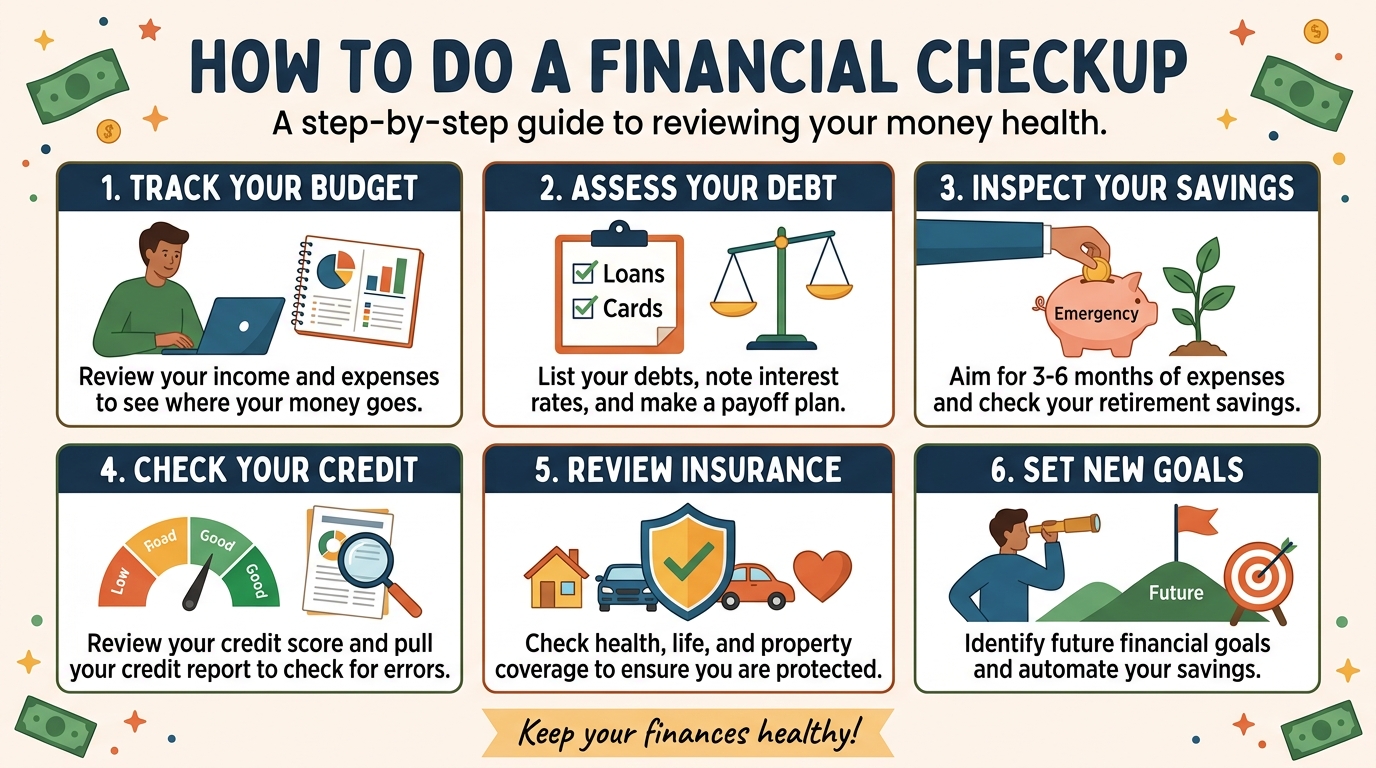
Ready to take control of your finances and secure your financial future? It’s time for a financial checkup! Just like you go to the doctor for a health checkup, your finances also need regular attention and care. A financial checkup is a great way to assess your current financial situation, set goals, and make a plan to achieve them. By taking the time to review your income, expenses, savings, investments, and debts, you can identify areas for improvement and make informed decisions to reach your financial goals. So, let’s dive in and learn how to do a financial checkup to ensure your financial health is in tip-top shape!
Creating a Budget
Why is creating a budget important? A budget is a crucial tool for financial planning as it helps you track your income, expenses, and savings goals. By creating a budget, you can gain a clear understanding of where your money is going and make informed decisions on how to allocate your funds effectively. It allows you to prioritize your spending, identify areas where you can cut back, and ensure that you are living within your means.
How to create an effective budget: Start by listing all your sources of income and then categorize your expenses into fixed (such as rent or mortgage) and variable (like groceries or entertainment). Calculate your total income and subtract your expenses to determine your discretionary income. Allocate a portion of this discretionary income towards savings and financial goals. Regularly track and review your budget to make adjustments as needed to stay on track with your financial objectives.
 How to Do a Financial Checkup
Reviewing Your Debt
Understanding your debt is crucial to improving your financial health. Start by gathering all your debt-related information, including outstanding balances, interest rates, and minimum payments. This will give you a clear picture of your total debt load. Once you have this information, prioritize your debts based on interest rates and terms. Focus on paying off high-interest debts first while continuing to make minimum payments on others. Consider creating a debt repayment plan to track your progress and stay motivated.
Regularly reviewing your debt situation is essential to staying on top of your financial obligations. Monitor your credit report to ensure all debts are being reported accurately and address any errors promptly. If you’re struggling to manage your debt, consider seeking help from a financial advisor or credit counseling service. By taking control of your debt and actively managing it, you can work towards a debt-free future and improve your overall financial well-being.
Evaluating Your Savings and Investments
Evaluating your savings and investments is crucial to ensure that you are on track to meet your financial goals. Start by reviewing your savings accounts, such as a regular savings account, high-yield savings account, or money market account. Assess the interest rates, fees, and accessibility of each account to determine if they align with your financial objectives.
Next, analyze your investment portfolio to evaluate its performance and risk level. Consider diversifying your investments across different asset classes, such as stocks, bonds, and real estate, to reduce risk and maximize returns. Review the fees associated with your investments and assess if they are reasonable compared to the potential returns. Regularly monitor and adjust your savings and investment strategy to adapt to changing market conditions and financial goals.
Checking Your Credit Score
Understanding Your Credit Score: Your credit score is a numerical representation of your creditworthiness based on your credit history. It typically ranges from 300 to 850, with higher scores indicating lower credit risk. Lenders use this score to evaluate your ability to repay loans and determine the interest rates they offer you. Monitoring your credit score regularly is crucial as it can impact your ability to secure loans, rent an apartment, or even get a job.
Improving Your Credit Score: If your credit score is lower than you’d like, there are steps you can take to improve it. Start by checking your credit report for errors and disputing any inaccuracies. Paying bills on time, reducing your credit utilization ratio, and avoiding opening multiple new accounts can also help boost your score over time. Be patient, as improving your credit score is a gradual process that requires consistent financial responsibility.
Planning for the Future
Retirement Planning: Planning for retirement is a crucial aspect of securing your financial future. Consider factors such as your desired retirement age, lifestyle expectations, and estimated expenses. Start by calculating how much you will need to save each month to reach your retirement goals. Utilize retirement accounts like 401(k)s or IRAs to maximize tax benefits and long-term growth.
Estate Planning: Estate planning involves making arrangements for the transfer of your assets in the event of your death. Create a will to specify how you want your assets distributed and designate beneficiaries for your accounts. Consider setting up trusts to protect assets and minimize estate taxes. Review and update your estate plan regularly to reflect any changes in your financial situation or family dynamics.