
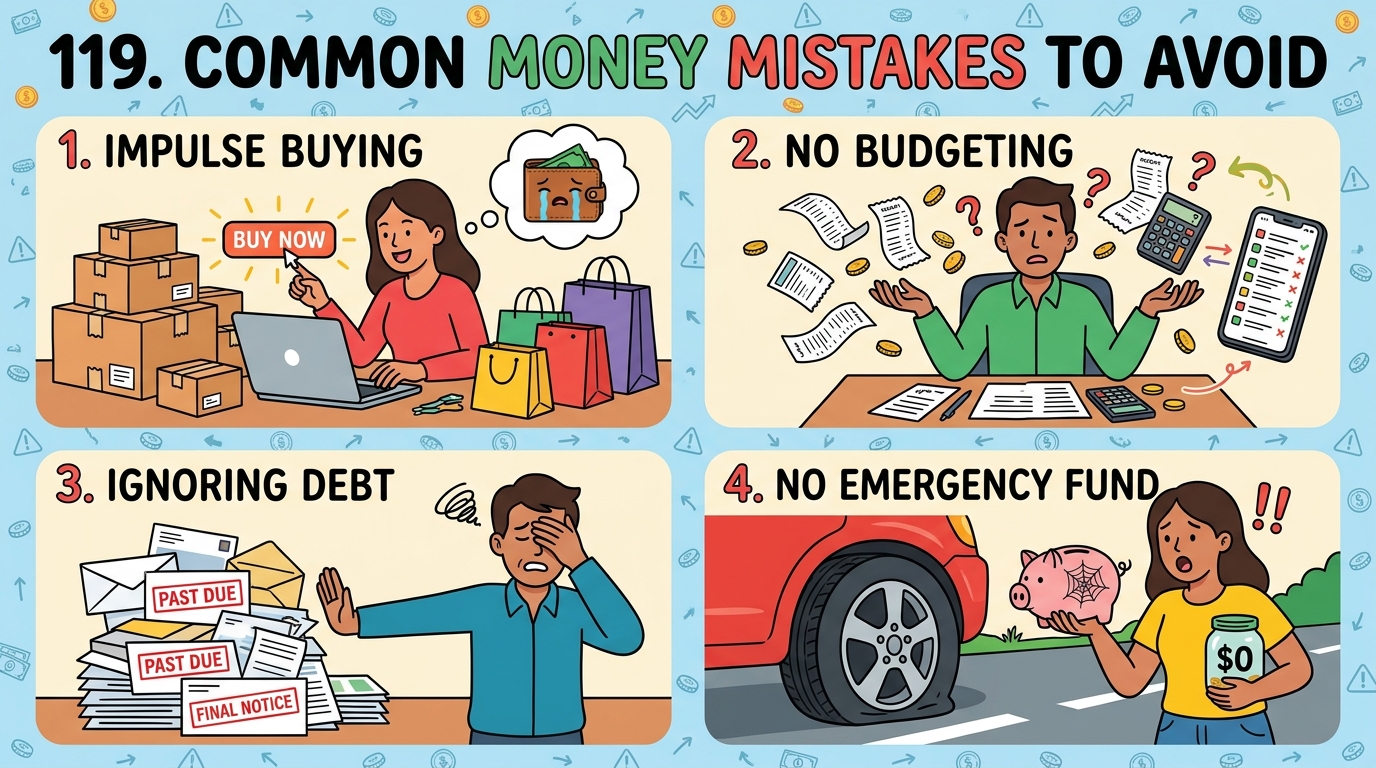
Money management is a crucial skill that everyone needs in order to secure a stable financial future. However, many of us fall into common money mistakes that can hinder our progress towards financial independence. From overspending to neglecting savings, these missteps can have a long-lasting impact on our financial well-being. In this blog post, we will explore some of the most prevalent money mistakes to avoid, providing you with the knowledge and tools to make better financial decisions. By steering clear of these pitfalls, you can set yourself up for a brighter and more secure financial future. So, let’s dive in and learn how to sidestep these common money mistakes and pave the way to financial success.
Ignoring budgeting
Ignoring budgeting can lead to financial chaos and uncertainty. Without a budget, it’s challenging to track expenses, set financial goals, and plan for the future. Budgeting provides a clear picture of your income and expenses, allowing you to make informed decisions about your money.
By creating and sticking to a budget, you can identify areas where you may be overspending and make necessary adjustments. Budgeting helps you prioritize your spending, save for emergencies, and work towards achieving your financial goals. It is an essential tool for financial stability and success.
 Common Money Mistakes to Avoid
Carrying High-Interest Debt
High-interest debt can significantly impact one’s financial well-being. Carrying debt with high interest rates, such as credit card debt or payday loans, can lead to a cycle of accumulating interest charges that make it challenging to pay off the principal amount. This can result in a drain on your finances, making it difficult to achieve other financial goals.
It is crucial to address high-interest debt promptly. Creating a plan to pay off high-interest debt should be a priority to avoid paying unnecessary interest charges. Consider consolidating debt into a lower-interest loan or credit card, or focus on paying off debts with the highest interest rates first. Making consistent payments above the minimum can help reduce the overall debt burden and improve your financial situation in the long run.
Not investing for the future
Investing for the future is crucial for long-term financial stability and growth. Many people make the mistake of not investing because they lack knowledge or fear the risks involved. However, by not investing, individuals miss out on the opportunity to grow their wealth over time through compounding returns. Investing in assets such as stocks, bonds, mutual funds, and real estate can help individuals build wealth and achieve their financial goals.
Not investing for the future can also lead to a shortfall in retirement savings. Without proper investments, individuals may struggle to maintain their standard of living in retirement. It is essential to start investing early, even with small amounts, to take advantage of the power of compounding. By creating a diversified investment portfolio and staying disciplined with regular contributions, individuals can secure their financial future and build wealth over time.
Neglecting to save for retirement
Not saving for retirement can have serious consequences on your financial future. Many people underestimate the amount of money needed to maintain their lifestyle after they retire. By neglecting to save for retirement, you may find yourself struggling financially in your later years.
It is important to start saving for retirement as early as possible to take advantage of compound interest and grow your savings over time. Consider contributing to retirement accounts such as a 401(k) or IRA to secure your financial future. Setting aside a portion of your income each month for retirement savings is crucial to ensure a comfortable and stress-free retirement.
Failing to track expenses
Tracking expenses is a crucial aspect of financial management that many individuals overlook. Without a clear understanding of where your money is going, it becomes challenging to make informed decisions about budgeting, saving, and investing. By failing to track expenses, you may miss out on identifying patterns in your spending habits, leading to potential overspending and financial instability.
Creating a system to monitor and categorize your expenses can provide valuable insights into your financial health. Utilizing tools such as spreadsheets or budgeting apps can help streamline the process and make it easier to track where your money is being allocated. By regularly reviewing your expenses, you can identify areas where you can cut back, allocate more funds, or adjust your financial goals to align with your spending habits.